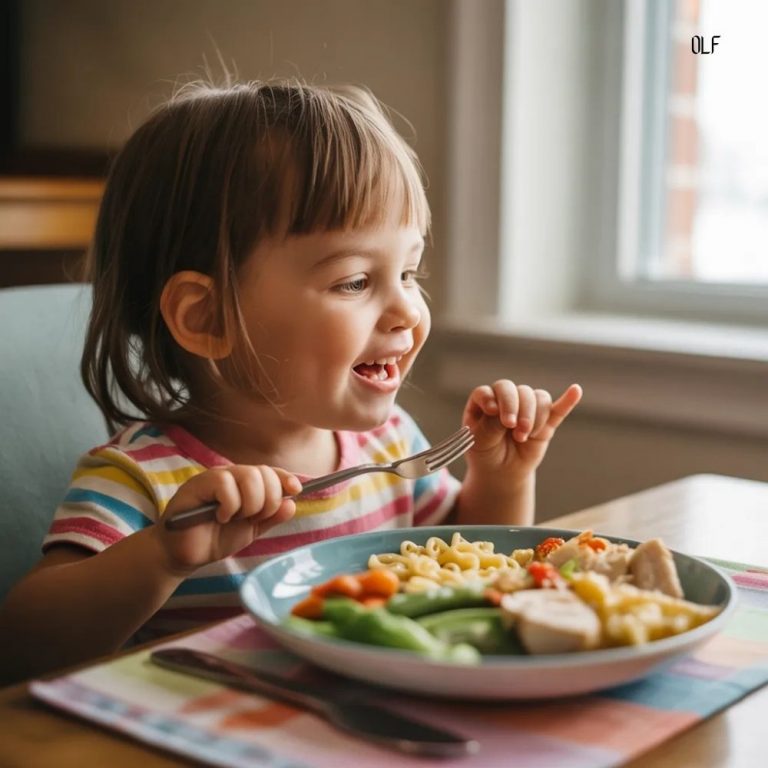
Mealtime tension rarely begins with bad intentions. It usually starts with a child pushing food aside and a parent trying to encourage just one more bite. Over time, those small moments of resistance can turn dinner into a daily negotiation.
Parents often worry that their child is not eating enough variety, while children feel increasingly pressured and protective of their preferences. The result is a cycle that feels exhausting for everyone at the table.
What many families need is not more persuasion, more creative recipes, or stricter rules. They need a clear structure that reduces pressure while steadily increasing exposure.
Children thrive when expectations are predictable and emotionally neutral, and food is no exception. A structured plate approach creates that predictability while quietly building flexibility over time.
This system is practical, measurable, and designed to support long-term skill development rather than short-term compliance.
Understanding Why Food Resistance Is Normal
Before implementing any system, it helps to understand what is developmentally appropriate.
Between the ages of two and seven, children commonly become more selective with food. This phase is often referred to as neophobia, or a hesitation toward unfamiliar foods. It is not a behavioral flaw. It is a developmental stage tied to sensory sensitivity and growing independence.
Young children experience taste, texture, smell, and appearance more intensely than adults. At the same time, their emotional regulation skills are still developing. If something looks unfamiliar, their reaction may be immediate and strong.
Additionally, children at this age are wired to test boundaries. Mealtime becomes one of the few areas where they feel a clear sense of control, and if they sense pressure, they often hold that control more tightly.
When parents respond with persuasion, bargaining, or frustration, the child’s focus shifts from learning about food to defending autonomy. A structured system reduces this dynamic by removing pressure while maintaining clear boundaries.
The Structured Plate Framework
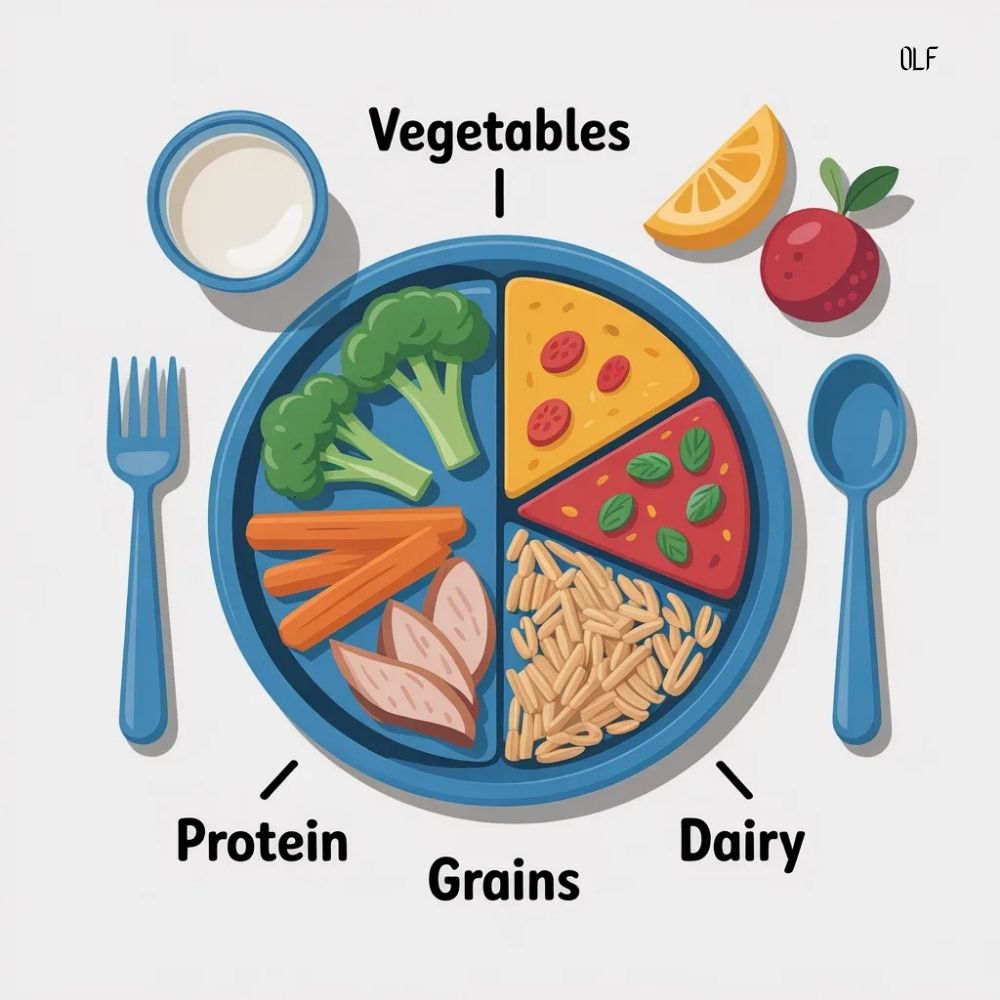
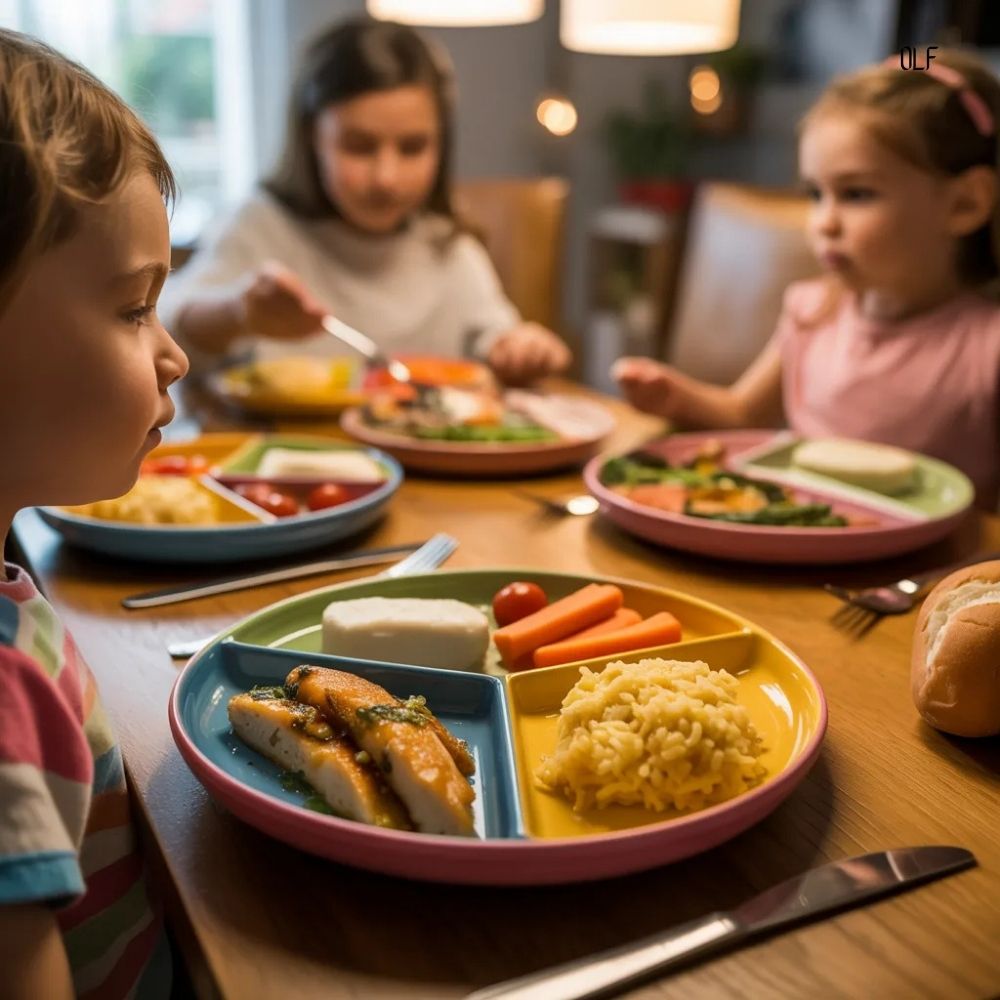
The core of this approach is simple and repeatable. Each dinner plate contains three components:
- A Safe Food
- The Shared Family Meal
- A Growth Food
Each component serves a purpose.
The Safe Food is something the child reliably eats without resistance. It may be rice, bread, fruit, or a familiar protein. Including this item ensures that the child feels secure and reduces anxiety about hunger.
The Shared Family Meal is the primary dish everyone is eating. This reinforces that dinner is a shared experience, not a customized service.
The Growth Food is a small portion of a new or less-preferred item. The portion should be intentionally small. The goal is exposure, not consumption.
This structure provides stability while encouraging gradual expansion of variety.
How to Implement the System Step by Step
Step One: Plan With Intention
Before serving dinner, identify the three components. The Growth Food should be modest in size. A single green bean, one thin carrot slice, or a spoonful of a new grain is sufficient. A large portion increases resistance. A small portion increases tolerance.
Step Two: State Expectations Clearly and Calmly
Children benefit from simple, consistent language. Before eating begins, you might say: “This is dinner. There is something you know, something we are all having, and something you are learning about.”
Avoid lengthy explanations. Keep your tone neutral. The predictability of the message builds security.
Step Three: Remove Pressure Completely
The child does not have to eat everything on the plate. They do not need to take a required bite. They are not rewarded for finishing vegetables. At the same time, no alternative meal is prepared.
If the child says they do not like the Growth Food, you can respond calmly: “You may not like it yet. You are still learning about it.”
The word “yet” is powerful because it communicates development without pressure.
Step Four: Maintain a Predictable Mealtime Window
Dinner lasts approximately 15 to 20 minutes. During this time, everyone remains seated. If a child chooses not to eat much, that decision stands. The next opportunity to eat is the next scheduled snack or meal.
This consistency reduces grazing and reinforces hunger awareness.
Step Five: Repeat Exposure Without Commentary
Growth Foods should appear multiple times over two weeks. Research and experience both show that children often need eight to twelve exposures before voluntarily trying something new. Exposure includes seeing, smelling, touching, or licking. Eating is not the only marker of progress.
What Progress Looks Like
Progress is not measured by immediate enthusiasm. It is measured by reduced resistance.
In the first few days, a child may push the Growth Food away or complain. By the middle of the week, those reactions often shorten in duration. By the second week, many children begin interacting with the new food without prompting.
Measurable indicators include:
- The child remains seated for the full meal window.
- Complaints become less intense or less frequent.
- The child touches or tastes the Growth Food independently.
These changes may feel subtle, but they represent meaningful development.
Responding to Common Pushback
When a child says, “I don’t like it,” the most helpful response is calm neutrality. You might say, “That is okay. You are still learning about it.” This communicates acceptance while keeping the structure intact.
If a child asks for something different, the response remains steady: “This is dinner. There is something here you can eat.” The presence of the Safe Food prevents hunger anxiety.
If a child leaves the table early, avoid replacing dinner later with preferred snacks. Doing so weakens the rhythm. Consistent timing teaches children to trust the structure.
Why This Approach Builds Confidence
Children become flexible eaters when they feel safe and unpressured. When food is consistently presented without emotional charge, curiosity has room to grow. The child begins to approach new foods voluntarily because the table no longer feels like a battleground.
This system builds internal confidence. The child learns that they can tolerate something unfamiliar without distress. Over time, that tolerance translates into willingness.
Parents also benefit. When the focus shifts from forcing bites to providing structure, emotional energy is preserved. Dinner becomes a predictable routine rather than a daily test.
Adapting the System as Children Grow
For toddlers and preschoolers, the Growth Food should be extremely small, and the emphasis should remain on sitting calmly.
For elementary-aged children, you can begin inviting descriptive language. Asking whether a food feels crunchy or smooth encourages sensory exploration without pressure.
For older children, offering limited choice within the Growth category increases ownership. You might ask them to select one vegetable to practice for the week. Structure remains, but autonomy increases.
Long-Term Outcomes
This structured plate approach builds more than eating variety. It strengthens several foundational skills.
Children learn emotional regulation by tolerating mild discomfort without escalation. They develop hunger awareness by eating from structured opportunities rather than constant grazing. They experience autonomy within boundaries, which strengthens self-trust.
Over months, families often notice reduced mealtime conflict, broader food acceptance, and calmer evenings. The transformation is gradual but steady because it is rooted in development rather than force.
A Positive Shift in Perspective
The goal of dinner is not perfection. It is practice. Each meal is an opportunity to reinforce stability, exposure, and calm expectation. When parents focus on structure rather than persuasion, they create an environment where growth happens naturally.
Confident, flexible eaters are not built through pressure. They are built through repetition, predictability, and emotional steadiness.
A structured plate does not solve everything overnight. What it does provide is a reliable framework that makes progress measurable and sustainable. With consistency, children learn that new foods are part of family life, not a threat to avoid.
And over time, that steady structure becomes the foundation for flexibility that extends far beyond the dinner table.