Many parents want their children to be responsible, capable, and independent. Yet in daily life, it is often faster to do things ourselves. We tie the shoes. We clear the plates. We pack the backpacks. Over time, this pattern quietly teaches children that responsibility belongs to the adult, not to them.
When parents decide to change that dynamic, the shift can feel chaotic. Requests are ignored. Tasks are half-finished. Reminders multiply. Frustration rises on both sides. What often appears to be defiance is usually a lack of structure.
Children do not resist responsibility because they are unwilling. They resist when expectations are unclear, inconsistent, or developmentally mismatched.
What builds independence is not random chore charts or sudden high expectations. It is a progressive system that matches responsibility to development and increases it gradually over time.
An age-based chore ladder provides that structure. It offers clarity, predictability, and measurable growth. The goal is not obedience. The goal is capability.
Why Responsibility Must Be Structured
Children are not born with executive function skills. Planning, sequencing, task initiation, and follow-through develop slowly across childhood. A five-year-old can remember one step. A ten-year-old can handle multi-step tasks. A twelve-year-old can begin managing independent routines.
When chores are introduced without considering developmental readiness, children either fail or rely heavily on reminders. This creates tension and weakens confidence.
An age-based system prevents this by answering three questions clearly:
- What is reasonable at this age?
- How much independence is expected?
- How will progress be measured?
When expectations are matched to ability, independence grows steadily.
The Progressive Responsibility Ladder
The system works in tiers. Each age group has defined responsibilities in three categories:
- Personal Care
- Shared Family Contribution
- Skill Development Tasks
Each tier builds on the previous one. Advancement happens gradually and predictably.
Ages 3–4: Foundation Stage
At this stage, children are learning imitation and routine. Tasks must be simple, visible, and completed with supervision.
Personal Care
- Put shoes in designated spot.
- Place dirty clothes in hamper.
- Wash hands independently.
Shared Contribution
- Carry plastic plate to sink.
- Help wipe table with assistance.
- Put toys into one bin.
Skill Development
- Match socks during laundry.
- Water a plant with guidance.
Implementation Structure
Give one responsibility at a time. Use simple wording: “Shoes go here.” Avoid adding multiple instructions in a single request.
Measurable Outcome
By the end of two weeks, the child completes at least one task daily with no more than one reminder. The focus at this stage is participation, not perfection.
Ages 5–6: Routine Building Stage
Children can follow two-step instructions and begin taking ownership of daily routines.
Personal Care
- Dress independently.
- Make bed in simple form.
- Brush teeth with minimal prompting.
Shared Contribution
- Clear own dishes.
- Help set table.
- Put folded laundry into drawers.
Skill Development
- Organize backpack before school.
- Feed a pet with supervision.
Implementation Structure
Introduce the “Do Then Play” sequence: “Shoes away, then outside.” Link responsibility to routine, not reward. The structure becomes predictable.
Measurable Outcome
Within one month, the child completes three consistent daily tasks with no more than two reminders per task.

Ages 7–8: Ownership Stage
At this age, children can manage small independent systems.
Personal Care
- Prepare simple breakfast such as cereal.
- Pack school bag with checklist.
- Keep bedroom floor clear.
Shared Contribution
- Empty dishwasher with guidance.
- Fold towels.
- Sweep small area.
Skill Development
- Track weekly allowance in simple notebook.
- Help plan one dinner choice per week.
Implementation Structure
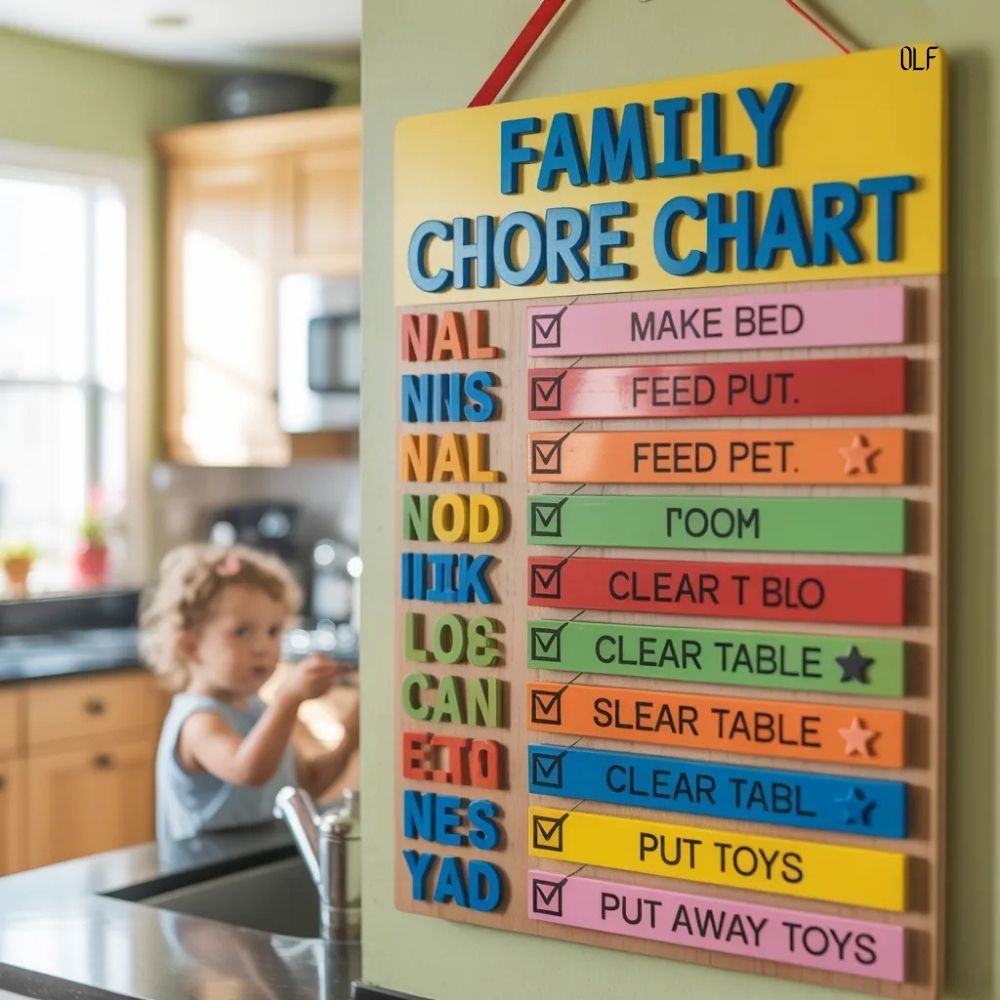
Introduce a weekly preview conversation: “This week your responsibilities are…” Write them visibly. Predictability reduces resistance.
Measurable Outcome
Eighty percent of assigned weekly tasks are completed without escalation. If reminders are still constant after four weeks, the task may be too advanced or too vague.
Ages 9–10: Skill Expansion Stage
Children can now manage multi-step tasks and delayed follow-through.
Personal Care
- Shower independently.
- Lay out clothes for next day.
- Manage homework materials.
Shared Contribution
- Take trash out on scheduled day.
- Load dishwasher fully.
- Help prepare simple meal components.
Skill Development
- Budget allowance using spend-save-give categories.
- Manage small personal calendar.
Implementation Structure
Shift from daily reminders to accountability check-ins: “I will check this at 7 PM.” This removes nagging and introduces responsibility review.
Measurable Outcome
Tasks are completed before check-in at least three out of four weeks per month.
Ages 11–12: Independence Preparation Stage
Children at this stage are preparing for greater autonomy in adolescence.
Personal Care
- Manage morning routine independently.
- Maintain room weekly.
- Prepare basic meals.
Shared Contribution
- Complete one consistent household job fully independently.
- Assist younger siblings appropriately.
- Help manage grocery list.
Skill Development
- Track spending digitally or in notebook.
- Plan and execute small personal project.
Implementation Structure
Transition to weekly responsibility meetings lasting 10–15 minutes. The child reports progress and identifies adjustments.
Measurable Outcome
Minimal parental reminders are required, and the child self-corrects missed tasks within 24 hours.
How to Introduce the System Without Resistance
When launching the system, avoid presenting it as a sudden overhaul. Instead, say: “As you grow, your responsibilities grow too. This helps you become more independent.”
Introduce only one or two new tasks at a time. Overloading reduces success. Expect initial testing. Children often push against new structure to understand whether it is stable. Remain calm and consistent.
If a task is incomplete, respond neutrally: “This still needs finishing.” Avoid lectures. The repetition of expectation builds habit.
Common Mistakes That Slow Progress
Giving Too Many Tasks at Once
Independence grows through mastery, not overwhelm.
Repeating Instructions Excessively
Repeated reminders train children to wait for prompts. Instead, state expectation once and follow with a predictable check-in.
Correcting Emotionally
If frustration shows, children focus on mood rather than task. Keep tone steady.
Measuring Self-Sufficiency Growth
True independence is observable.
You can measure:
- Number of reminders per task.
- Percentage of weekly tasks completed independently.
- Speed of recovery after missed responsibility.
- Child’s ability to anticipate next step without prompting.
Progress may appear gradual, but small reductions in reminders signal meaningful development. If a child moves from five reminders per task to two within a month, that is measurable growth.
Why This System Builds Real Independence
Independence is not built through sudden expectation. It is built through structured progression.
The progressive ladder teaches children that responsibility increases predictably with age. It strengthens executive function, follow-through, and accountability. It also shifts family culture from parent-managed to shared contribution.
Children who participate in household tasks develop stronger competence beliefs. They see themselves as capable contributors rather than passive recipients of care. This mindset carries into schoolwork, friendships, and later employment.
Long-Term Outcomes
An age-based chore system does more than maintain order. It teaches:
- Task sequencing.
- Time awareness.
- Ownership.
- Accountability without shame.
Over time, children internalize the rhythm of contribution. They anticipate responsibility instead of resisting it.
Parents experience reduced mental load. Fewer reminders are needed. Daily life becomes more collaborative.
Independence does not arrive suddenly in adolescence. It is constructed slowly, step by step, through consistent expectation and developmentally appropriate growth.
A progressive responsibility ladder provides clarity in that process. It allows parents to see measurable advancement and allows children to experience steady capability expansion.
Real independence is not dramatic. It is cumulative. With clear structure and calm consistency, children grow into it naturally.