
Morning stress rarely starts in the morning. It builds the night before in small, unfinished details that do not feel urgent at the time. A backpack is only half-packed. A library book is still on the desk.
Shoes are somewhere in the house but not together. A lunch decision is postponed. None of these issues feel significant at 8:30 p.m., but by 7:15 a.m., they combine into pressure.
Parents begin issuing rapid instructions. Children feel rushed and move more slowly under stress. The day starts with correction rather than connection.
Most families try to fix this by tightening the morning routine. In practice, the more effective shift is to move preparation into the evening when time is flexible and emotions are steadier.
A consistent 10-minute evening reset creates measurable change. It reduces morning decision fatigue, decreases searching, and lowers emotional intensity before school. The goal is not perfection. The goal is predictability.
Why Mornings Feel Harder Than They Should
Children wake up with developing executive function skills. Planning, sequencing, and time awareness are not fully active immediately after sleep. When several tasks must happen quickly under a deadline, even capable children struggle.
Mornings also operate on fixed timelines. School does not wait. Buses do not delay. When multiple preparation tasks compete for limited time, friction increases.
By shifting preparation to the night before, families remove uncertainty from the morning window. The brain handles planning better when it is not rushed. A small, structured reset reduces the number of decisions that must be made under pressure.
The Structure of the 10-Minute Reset
The reset follows four predictable phases each evening. Once the habit is established, the sequence takes about ten minutes per child.
1. Pack
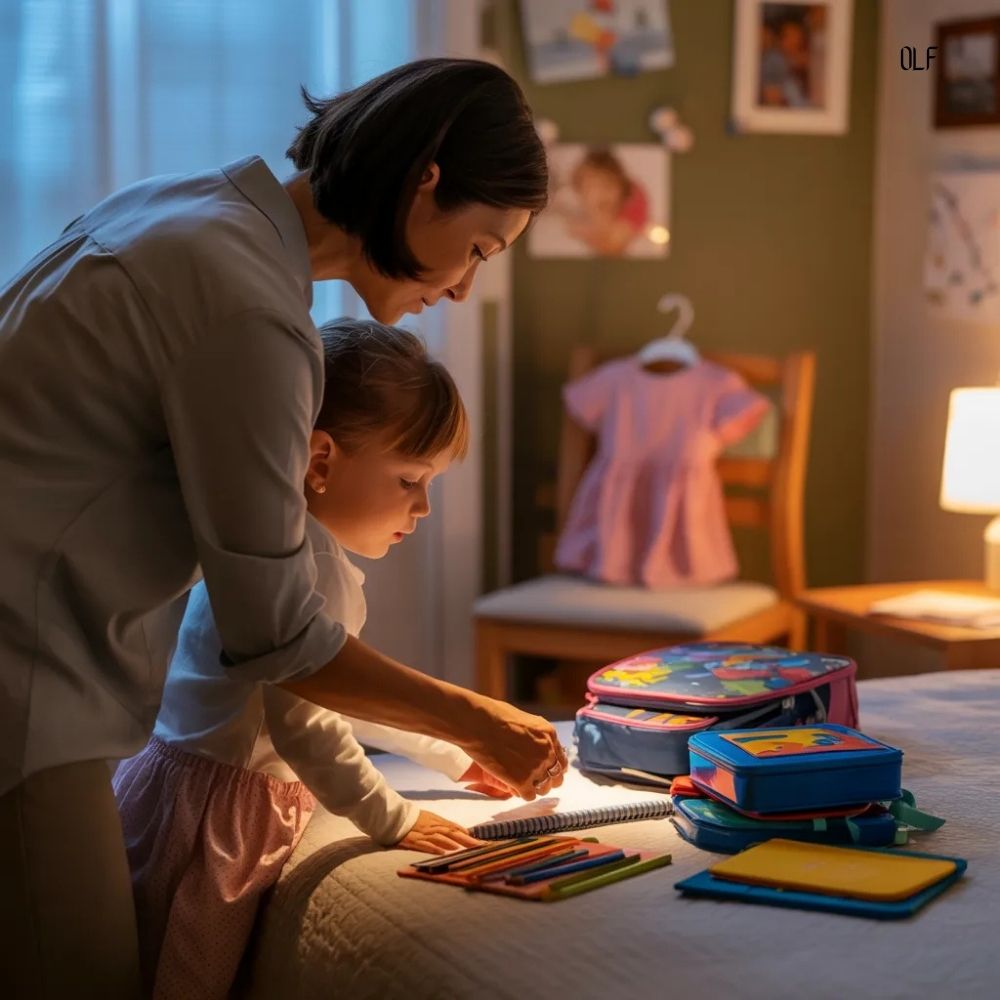
Everything that must leave the house is gathered and placed inside the backpack. This includes completed homework, signed folders, library books, and sports equipment. If water bottles are used, they are rinsed and placed inside or next to the bag.
The goal of this phase is to eliminate searching in the morning.
2. Prepare
Personal preparation comes next. Clothes are chosen and laid out. Shoes are paired and placed near the door. Jackets or outerwear are ready. If lunch is packed at home, components are prepared or at least decided upon.
Preparation reduces morning decision-making. Even choosing between two outfits the night before removes a potential argument at 7:05 a.m.
3. Place
Prepared items are placed in a consistent “launch zone” near the exit. This zone might include:
- Backpacks lined up.
- Shoes together.
- Coats hung in one spot.
- Lunch container ready to grab.
When placement becomes consistent, children stop wandering the house looking for items.
4. Preview
The final step is brief but important. Ask whether anything is different tomorrow. A field trip, special project, or early activity should be identified now rather than at the last minute. This preview builds anticipation skills and prevents avoidable surprises.
Introducing the Reset Calmly
When adding this routine, avoid presenting it as a correction to past chaos. Frame it as preparation for smoother mornings.
You might say, “We are going to spend ten minutes each night getting ready so mornings feel easier.”
Start with only the packing and placement phases for the first week. Once those feel automatic, add clothing preparation and preview. Gradual implementation reduces resistance.
Expect some initial testing. Children may say they prefer doing it in the morning. Respond calmly and consistently: “We reset at night so morning stays smooth.” Consistency is what makes the habit stick.
What Progress Looks Like
The first week often requires guidance. You may walk through each step together. The reset may take longer than ten minutes.
By the second or third week, you should notice measurable improvements:
- Fewer morning reminders.
- Reduced searching for items.
- More consistent departure times.
- Lower emotional intensity before leaving.
If you previously gave five reminders and now give two, that is measurable growth. If you leave on time four mornings in a row instead of one, the system is working. Progress is incremental but steady.

Adjusting by Age
Children at different developmental stages require different levels of support.
For younger children ages four to six, parents lead most of the reset. The child participates by placing shoes correctly and choosing clothing from limited options. The focus is exposure to routine rather than independence.
For ages seven to nine, children can pack backpacks with supervision. A simple printed checklist near the launch zone helps reduce forgotten steps. Parental reminders shift from constant prompting to quick check-ins.
For ages ten to twelve, responsibility increases. You might say, “I will check the launch zone at 8:00.” If something is missing, the child corrects it before bed. The reset becomes primarily child-managed. The structure remains consistent. The level of independence grows.
The Measurable Outcome
The purpose of the 10-minute evening reset is reduced morning rush stress. Within three weeks, most families observe:
- Departure happening on time more consistently.
- Fewer raised voices.
- Children initiating preparation independently.
- Less searching and fewer forgotten items.
These changes are observable and trackable. They signal growing self-sufficiency.
The Long-Term Skill Being Built
This reset builds anticipatory planning. Children learn to think ahead and prepare before pressure arrives. Over time, this habit extends beyond school mornings. It supports project planning, activity preparation, and personal organization in adolescence.
It also reduces emotional strain within the household. When mornings begin smoothly, parents and children preserve connection rather than spending energy correcting.
A small, consistent routine produces compounding benefits.
A Practical Shift With Lasting Impact
Ten minutes each evening may not feel significant, but it transforms the tone of the next day. Preparation replaces reaction. Execution replaces searching. Calm replaces urgency.
The 10-minute evening reset does not eliminate every challenge, but it creates structure where chaos once lived. With repetition, children internalize the rhythm of preparing ahead.
That rhythm becomes independence. And independence, built steadily through small nightly habits, reduces morning stress in measurable and lasting ways.