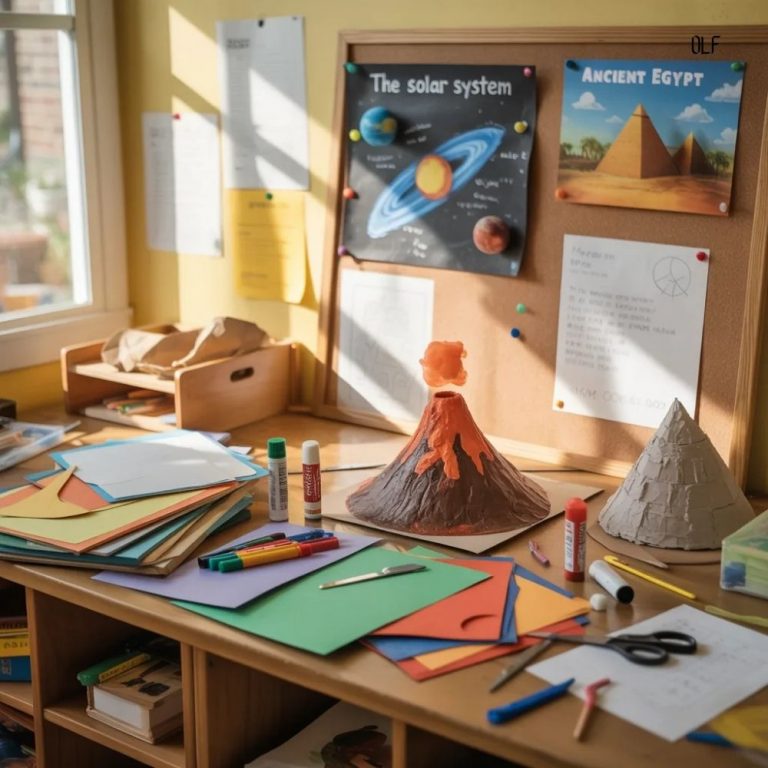
Large assignments often create disproportionate stress. A book report due in two weeks somehow turns into panic the night before. A science project sits untouched until the deadline feels urgent. Even capable children can shut down when a task feels too big to start.
What looks like procrastination is often overwhelm.
Children do not naturally see long-term assignments as sequences of smaller actions. Their brains are still developing executive function, which includes planning, time estimation, sequencing, and prioritization.
When they look at a large task, they see one large demand rather than several manageable pieces. If the only instruction is “Start your project,” many children hesitate because they do not know what starting actually means.
The Divide–Schedule–Complete method provides a structured way to turn large assignments into visible, doable steps. It replaces last-minute stress with gradual progress.
The outcome is measurable. Fewer emotional shutdowns. Earlier task initiation. More consistent follow-through.
Why Big Assignments Trigger Avoidance
When a task feels abstract, the brain interprets it as uncertain. Uncertainty increases stress. Stress reduces initiation. Children may avoid beginning because they do not know:
- How long it will take.
- What the first step is.
- Whether they can finish it successfully.
Without a structure, parents often step in reactively. Reminders increase. Tension builds. The assignment becomes emotionally loaded. The solution is not pushing harder. It is making the task smaller and visible.

The Divide–Schedule–Complete Method
This system has three clear stages:
- Divide the assignment into concrete parts.
- Schedule those parts across available days.
- Complete one scheduled step at a time.
Each stage reduces cognitive load.
Step One: Divide the Assignment
The dividing stage happens as soon as the assignment is given, not a few days before it is due. Sit down with your child and ask one guiding question: “What are the parts of this project?”
If it is a book report, the divided steps might look like:
- Choose the book.
- Read chapters 1–3.
- Read chapters 4–6.
- Write a rough outline.
- Draft introduction.
- Draft body paragraphs.
- Edit and revise.
If it is a science project, steps might include:
- Choose topic.
- Research basic information.
- Gather materials.
- Conduct experiment.
- Record results.
- Create poster board.
The key is specificity. “Work on project” is not a step. “Write first paragraph” is a step.
For younger children, you may need to suggest the breakdown initially. For older children, ask them to attempt the division first, then refine it together.
The measurable goal of this stage is clarity. If your child can look at the list and say, “That feels doable,” the division worked.
Step Two: Schedule the Steps
Once the assignment is divided, place each step onto specific days. Avoid vague statements like, “Work on this sometime this week.”
Instead, say: “On Monday, you will read chapters 1–3. On Wednesday, you will write the outline.”
Spread the steps across the available time window. Build in a buffer day before the deadline. Visually mark the plan on a calendar or planner. Visibility reduces mental load.
This scheduling step transforms the project from an overwhelming whole into daily mini-tasks. The measurable outcome is earlier initiation. If the child begins working days before the deadline rather than the night before, progress is happening.
Step Three: Complete One Step at a Time
When it is time to work, focus only on the scheduled step. Do not revisit the entire project. Keep the attention narrow.
For example: “Today we’re just writing the outline.” When that step is completed, mark it visibly as done. Crossing off a step builds momentum and confidence.
If resistance appears, remind your child: “We’re not doing the whole project today. Just this one part.” Reducing scope lowers anxiety.

A Realistic Example
Imagine a fourth grader assigned a history presentation due in ten days. Without structure, the project sits untouched until the final weekend. Stress increases. The parent ends up assisting heavily late at night.
With the Divide–Schedule–Complete method, the same assignment unfolds differently.
Day 1: Divide the project into steps.
Day 2: Research basic facts.
Day 4: Draft outline.
Day 6: Create note cards.
Day 8: Practice presentation.
Each step is limited to 20–30 minutes. By the time the final week arrives, most of the work is already done. Emotional intensity remains low because progress has been steady. The measurable difference is not perfection. It is the absence of panic.
What to Expect in the First Month
Initially, children may resist the dividing process because it feels like extra work. They may prefer to postpone thinking about the assignment. Stay steady. The dividing stage takes only ten minutes but saves hours later.
During the first few projects, you may need to guide more heavily. Over time, encourage your child to suggest steps independently.
Within several assignments, parents often notice:
- Fewer last-minute crises.
- Reduced emotional shutdown.
- Increased independent planning.
- Improved time awareness.
Track how early your child begins assignments compared to previous patterns. Earlier start times indicate progress.
Handling Pushback
If a child says, “I’ll just do it later,” respond calmly: “Let’s divide it so it feels manageable.”
If they insist they can handle it alone, allow independence while still reviewing their plan briefly. Ask: “What are your first three steps?” The goal is building skill, not control.
Adjusting by Age
For younger children in early elementary school, keep the number of steps small and visible. Use simple language and visual checklists.
For middle elementary grades, begin transferring ownership. Have them write the steps while you observe.
For older children, reduce direct involvement but maintain the expectation that large assignments must be divided before beginning. The structure remains constant. Responsibility gradually shifts.
The Long-Term Skill Being Built
The Divide–Schedule–Complete method builds planning competence. Children learn that large tasks are sequences of smaller actions. They experience control over time rather than reacting to it.
This skill transfers beyond school. It applies to long-term goals, extracurricular projects, and eventually adult responsibilities.
Children who learn to break down tasks early are less likely to avoid challenges because the steps feel visible.
Structure Replaces Panic
Overwhelm often comes from looking at a mountain and not knowing where to begin. The Divide–Schedule–Complete method turns the mountain into steps.
When assignments become sequences rather than single demands, emotional resistance decreases. Children learn that starting small is not weakness. It is strategy.
And strategy, practiced repeatedly, builds calm confidence in handling big responsibilities without unnecessary stress.