
Few parenting environments amplify tension faster than the car. Children are confined. Movement is limited. Siblings sit close together. Transitions are often rushed. A small disagreement over space, music, or a misplaced snack can escalate quickly because there is no easy way to separate or reset.
Many parents attempt to manage behavior reactively while driving, which increases stress and reduces safety. Warnings are issued from the front seat. Voices rise. Consequences are threatened mid-traffic. The emotional tone of the entire outing shifts.
Backseat conflict rarely begins during the drive. It begins before it.
When expectations are unclear, children experiment with behavior inside a moving vehicle. A predictable pre-drive routine reduces uncertainty and lowers emotional intensity before the engine even starts.
The Calm Car Routine centers on one consistent step: clear expectations stated before driving. The outcome is measurable. Fewer mid-drive arguments. Shorter escalations. Calmer transitions.
Why Car Conflict Escalates So Easily
Cars create a unique environment. Children have limited physical autonomy. They cannot easily walk away from irritation. If they are tired, hungry, or overstimulated, their tolerance decreases further.
In addition, the parent’s attention is divided. Driving requires focus. When children sense limited supervision, behavior can drift quickly.
Conflict escalates when:
- There are no clear behavioral expectations.
- Each drive operates under different rules.
- Corrections happen only after problems begin.
- Consequences are inconsistent.
Predictability reduces testing. When children know exactly what will happen if behavior crosses a boundary, they are less likely to push it.
The Calm Car Routine
The routine has three consistent parts delivered before the vehicle begins moving:
- State the behavioral expectation.
- State the consequence clearly.
- Invite agreement.
The entire routine takes less than one minute. The power lies in repetition. Every drive begins the same way.
Step One: State the Expectation Clearly
Before starting the engine, pause. Turn slightly toward the back seat and state the rule calmly. For example: “In the car, we keep hands to ourselves and voices at a calm level.”
Keep the statement short. Avoid adding multiple layered instructions. Choose one or two consistent expectations and repeat them every time.
Other examples might include: “In the car, we stay buckled and speak respectfully.” The tone should be steady and matter-of-fact, not stern. This step shifts the drive from reactive to proactive.
Step Two: State the Consequence Calmly
Children need to know what will happen if the expectation is not followed. For example: “If arguing starts, we will pull over and pause until everyone is calm.”
Or: “If voices get loud, music will turn off for the rest of the drive.”
The consequence should be realistic and enforceable. It should not be extreme or unrelated.
Avoid threats such as canceling long-term plans. The correction should connect directly to the environment. When children understand the boundary before movement begins, testing decreases.
Step Three: Invite Agreement
End the routine with a simple check: “Does everyone understand?” Wait briefly for acknowledgment. This is not a debate. It is a confirmation.
When children respond verbally, they are more likely to internalize the expectation. Then begin driving.
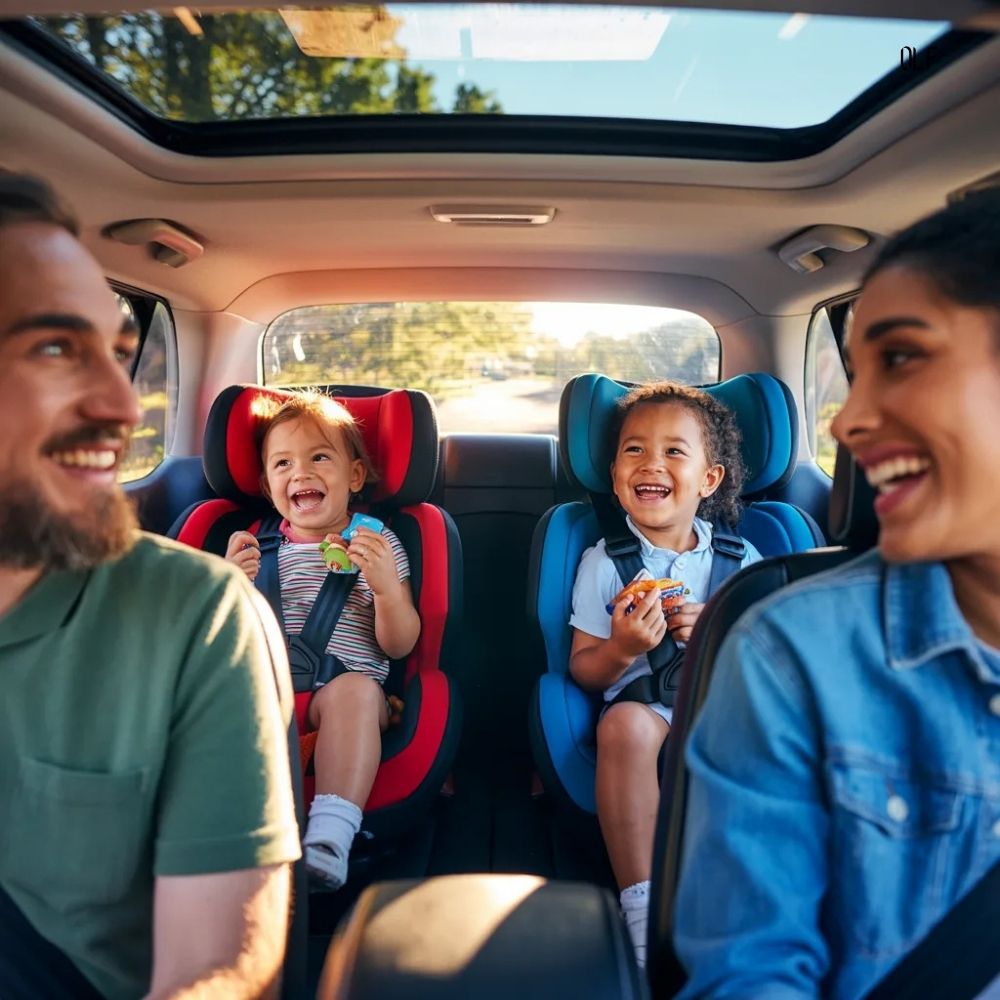
A Realistic Example
Imagine two siblings who frequently argue during short school drop-offs. Before starting the engine, the parent says: “In the car, we keep our hands to ourselves and speak respectfully. If arguing starts, we will pull over until everyone is calm. Do you understand?”
The children nod. If five minutes into the drive arguing begins, the parent calmly pulls over and says: “We are pausing until voices are calm.”
There is no lecture. No raised voice. When calm returns, driving resumes.
Within several drives, the number of escalations typically decreases because the consequence is predictable and consistent. The measurable change is fewer mid-drive corrections and shorter arguments.
What to Expect in the First Two Weeks
Initially, children may test whether the pause or consequence will actually occur. They may assume the parent will not follow through due to inconvenience.
Consistency is essential. If you state that you will pull over, pull over. If you state that music will turn off, turn it off calmly.
Within one to two weeks, most families notice:
- Shorter arguments.
- Faster correction after reminders.
- Reduced yelling from the front seat.
- Less emotional carryover after arrival.
Track how many times you need to correct behavior per drive. If that number decreases, the system is working.
Adding Preventive Supports
In addition to expectations, consider simple preventive adjustments:
- Assign fixed seating positions.
- Prepare a quiet activity for longer drives.
- Schedule a snack before departure if hunger contributes to irritability.
- Keep drives as distraction-free as possible for younger children.
These supports complement the routine but do not replace it.
Measuring Fewer Escalations
You can measure progress by observing:
- Frequency of arguments per drive.
- Duration of backseat conflicts.
- Emotional intensity during correction.
- Parent stress level while driving.
If arguments drop from daily to occasional within several weeks, the routine is effective. If children begin correcting each other before you intervene, internalization is happening.
The Long-Term Skill Being Built
The Calm Car Routine builds situational awareness and impulse control in confined spaces. Children learn that environments carry predictable expectations. They also learn that emotional regulation is required even when frustrated.
Over time, children begin anticipating rules in other settings. They understand that entering a new environment means recalling expectations. That transferable skill reduces conflict beyond the car.
Starting Before the Engine Changes the Tone
Most in-car arguments feel sudden, but they are often the result of unclear structure. When parents pause briefly before driving to state expectations and consequences calmly, they shift the entire tone of the ride.
Delivered consistently, this routine reduces backseat conflict and protects the emotional climate of daily transitions.
And when the car becomes predictable rather than chaotic, even short drives feel steadier and safer for everyone involved.