Many families plan their weeks based on logistics alone. Appointments are added to the calendar. Practices are scheduled. Work deadlines are marked. School obligations are noted. The week fills quickly. What rarely gets mapped is energy.
By Wednesday evening, tension rises. Children are irritable. Parents are short-tempered. Homework feels heavier than usual. Small conflicts escalate faster. It is not always a behavior issue. Often, it is accumulated fatigue.
Families frequently overload certain days without realizing it. A late school day followed by sports practice and homework may look manageable on paper. In reality, it drains emotional reserves. When multiple high-demand days cluster together, burnout becomes predictable.
The Family Energy Map provides a simple structure for distributing effort across the week. It shifts planning from purely time-based to energy-aware.
The outcome is measurable: fewer emotional crashes, fewer midweek meltdowns, and steadier family rhythm.
Why Energy Planning Matters
Children’s nervous systems are still developing. Emotional regulation requires energy. So does attention, social interaction, and problem-solving. When energy reserves drop, regulation weakens.
Parents experience similar patterns. After a long workday followed by multiple commitments, patience decreases. Correction becomes sharper. Conflict feels heavier.
If every day carries equal demand, no day provides recovery. The Family Energy Map introduces intentional contrast between high-demand and low-demand days.
The Weekly Energy Distribution Method
This system has three consistent steps:
- Identify high-demand commitments.
- Label each day’s overall energy level.
- Protect at least two low-demand days.
The method does not eliminate commitments. It balances them.
Step One: Identify High-Demand Activities
At the start of each week, review scheduled events. High-demand activities often include:
- Sports practices or games.
- Long school days.
- Major work meetings.
- Medical appointments.
- Social events.
- Large school assignments due.
High-demand does not only mean long. It means emotionally or cognitively draining. For example, a two-hour birthday party may drain a sensitive child more than a full school day. Mark these events clearly on the calendar.
Step Two: Label Each Day’s Energy Level
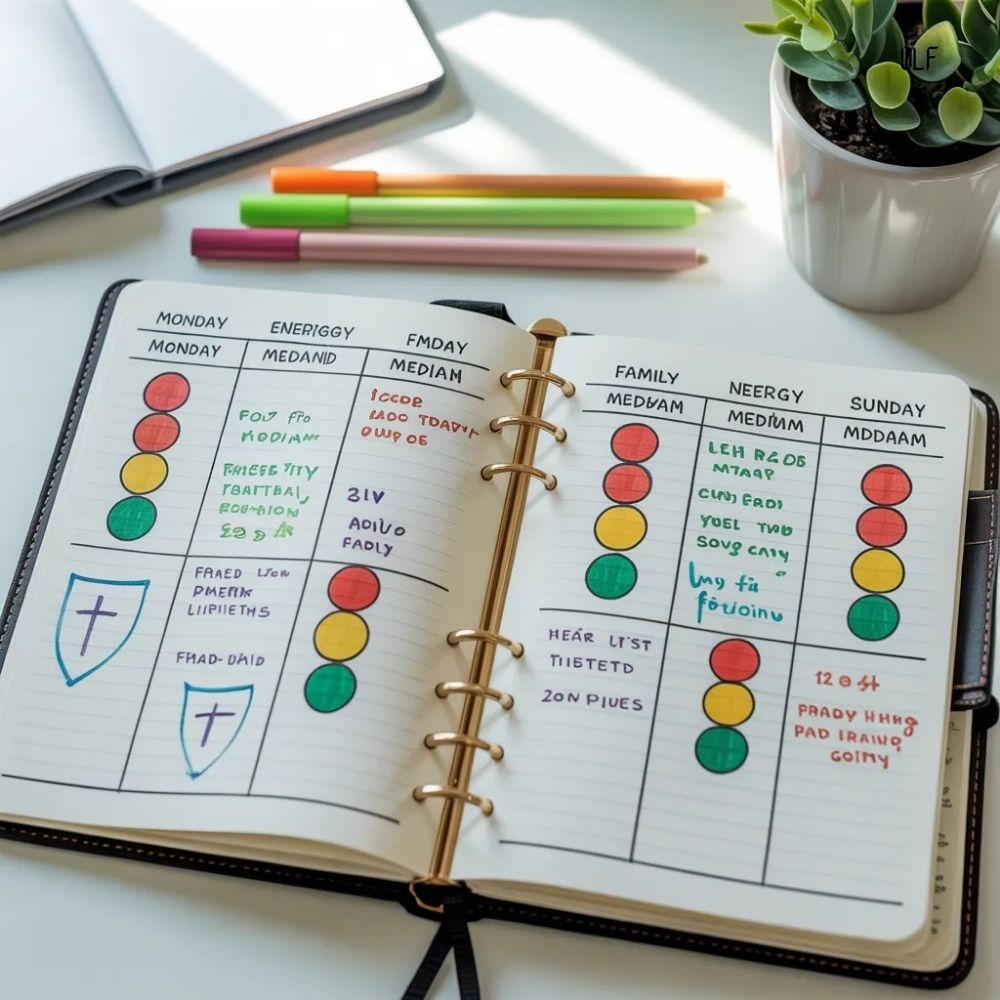
After identifying commitments, assign each day a simple label:
- High-demand
- Moderate-demand
- Low-demand
A high-demand day might include school, practice, and homework. A low-demand day might include school only, with no evening activities.
If you notice three high-demand days in a row, that is a signal. The goal is not perfection. It is awareness.
When families begin labeling energy levels, patterns become visible. Midweek burnout often correlates directly with clusters of high-demand days.
Step Three: Protect Low-Demand Days
At least two days per week should remain intentionally low-demand whenever possible. A low-demand evening may include:
- Simple dinner.
- Short homework block.
- Early bedtime.
- Quiet family time.
Avoid scheduling extra social events on these days. Low-demand does not mean unproductive. It means restorative.
If a high-demand day is unavoidable, plan the following day as lighter whenever possible. This rhythm prevents accumulation of stress.
A Realistic Example
Imagine a family with two children:
- Monday includes school and soccer practice.
- Tuesday includes school and a late work meeting for one parent.
- Wednesday includes school and music lessons.
Without energy mapping, all three days become high-demand. By Thursday, children are irritable and homework battles increase.
With the Family Energy Map in place, the parent identifies Monday and Wednesday as high-demand. Tuesday remains moderate. Thursday is intentionally protected as low-demand. No extra activities are added. Dinner is simple. Bedtime is earlier.
Friday may be moderate again. Within weeks, the emotional tone of Thursday improves noticeably. Conflicts decrease because the nervous system has recovery time. The measurable difference is not fewer commitments overall. It is fewer burnout moments.
What to Expect in the First Month
At first, families may realize they have unintentionally scheduled high-demand days consecutively for months. That awareness alone shifts planning behavior.
During the first few weeks, you may not be able to adjust every commitment. Even then, labeling days helps parents anticipate tension rather than react to it.
Within several weeks, families often observe:
- Reduced midweek meltdowns.
- Improved homework focus on low-demand days.
- Fewer sibling conflicts after lighter evenings.
- Better sleep patterns when recovery days are respected.
Track emotional intensity across the week. If Thursdays previously felt chaotic and now feel calmer, energy distribution is working.
Adjusting for Different Ages
Preschool children require more low-demand days than older children. Their tolerance for structured activity is limited.
Elementary-aged children can handle moderate-demand days but still need predictable recovery.
Older children can tolerate busier schedules but benefit from one or two evenings with no structured expectations.
The principle remains steady across ages. Energy is finite.
Planning for Parents’ Energy
The Family Energy Map applies to adults as well. If one parent has a demanding workday, that evening should not also carry heavy parenting tasks. Plan easier meals. Simplify expectations.
Children sense parental exhaustion. Reducing adult overload reduces household tension.
Handling Unavoidable High-Demand Weeks
Some weeks will contain unavoidable intensity, such as exam periods or major work projects. During those weeks:
- Shorten extracurricular commitments if possible.
- Simplify meals.
- Reduce optional social events.
- Increase sleep priority.
You cannot eliminate demand, but you can soften its impact. After a high-demand week, intentionally schedule a lower-demand weekend.
The Long-Term Skill Being Built
The Family Energy Map teaches children awareness of capacity. They learn that energy fluctuates and that planning can protect emotional regulation.
Over time, older children can begin labeling their own days: “Tomorrow is a big day. I need to go to bed earlier.”
This awareness builds resilience without pushing constant productivity. Parents model sustainable pacing rather than overextension.
Sustainable Rhythm Prevents Reactive Parenting
Burnout often masquerades as behavior problems. In reality, it is often accumulated demand without recovery.
The Family Energy Map replaces guesswork with awareness. By identifying high-demand days and protecting low-demand ones, families create breathing space within busy weeks.
The result is not a perfectly calm household. It is a steadier one. When energy is distributed intentionally, regulation improves. Conflict shortens. Recovery happens faster.
And over time, the family rhythm feels sustainable rather than reactive, which reduces burnout for both children and parents alike.